
A deteriorating wastewater liftstation is located in a municipality. Pumps are about to expire their useful life, while controls require modernization, and the access hatch should be replaced. But the concrete wet well is robust and solid.
Should the entire station be destroyed and rebuilt? Not necessarily. It is better to ask if the infrastructure that is in place will be able to support a modern system of pumping without compromising future capacity and reliability or maintenance access.
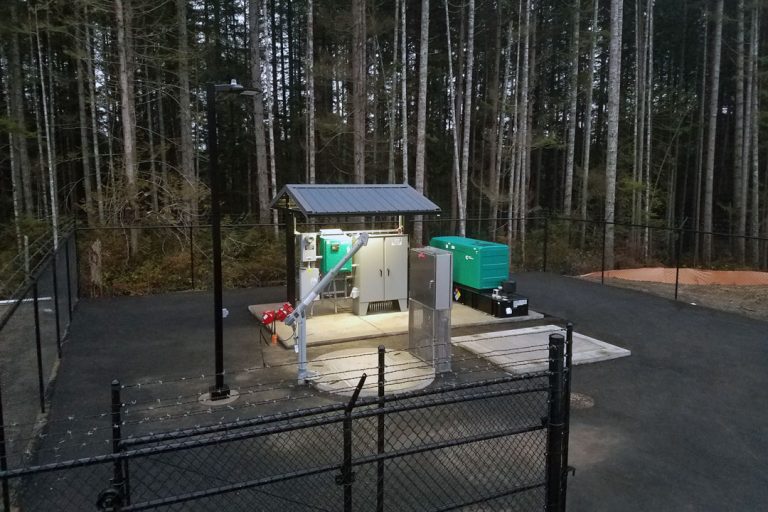
Image credit: romtecutilities.com
A well-designed retrofit of the pump station could preserve the infrastructure’s value while replacing parts that no longer meet operational standards.
Start with the structure that no one wants to replace
The wet well is typically one of the most expensive and disruptive parts to replace since it is hidden, connected to the existing piping, and vital to the process of removing wastewater.
Retaining the concrete structure may decrease excavation and construction work.
The degradation of the area around the access hatch could cause problems with this decision. Romtec Utilities says that wet well hatches are usually replaced in retrofits. Rather than attaching a new hatch to deteriorated concrete replacement of the entire top slab could be a better option. This option can be utilized to increase accessibility and enhance the usability of the structure without the need to replace the entire wet well.
A more powerful pump alters the Engineering
If a neighborhood in the area has seen a significant increase in population since the original lift station was installed. It’s possible that existing pumps are no longer sufficient to handle the increasing flows of wastewater.
A pumping station upgrade could involve higher-horsepower pumps, but equipment selection cannot happen independently of the surrounding system.
Engineers should also look at the hydraulic requirements of the system. This includes flow and the total dynamic pressure. The installation of a bigger pump before evaluating the conditions can cause more problems than it resolves. Planning for future expansion during designing the initial design can enable you to expand later.
Make sure that the waste water is moving during construction
Retrofitting a pump station for wastewater is a unique problem which isn’t faced by other projects. The station might need to be operational during construction.
When contractors aren’t busy and preparing for the next project, wastewater is still arriving. According to the type of project the temporary bypass pumping might be required to keep the service until old equipment is removed and new components are put in place.
Romtec Utilities tackled this type of challenge at the Federal Law Enforcement Training Center in Brunswick, Georgia.
The project involved the replacement of two old wastewater lifting stations, whilst maintaining the operation at the facility. The project was able adapt to existing station footprints as as operational requirements by using specific engineering for the site and modular replacement systems. This is a good example of how important it is to look at the construction process prior to installing.
If you decide to replace, it is the best Option
Not all stations are suitable to be renovated. If the sewer lift station is in need of a replacement because of a severely degraded well, structural limitations or significant changes to hydraulic requirements, it might be better to replace instead of alter.
The choice should take into account structural health, equipment compatibility, construction access as well as service continuity and long-term operational requirements. Romtec Utilities begins retrofit and replacement projects by determining what elements will remain and which need to be replaced.
The company develops engineering solutions specifically for the site, as well as preliminary plans as well as budget estimations. Prefabricated components can assist in facilitate installation and help reduce construction on site.
The project isn’t finished when the pumps kick in
A modern lift station should work as a complete system. Before returning a lift facility to normal service, restart testing, commissioning, as well as equipment verification are necessary to make sure that all pumps, controls and the related equipment function according to design.
Manuals for maintenance and operation and training of operators, are vital. Before taking over responsibility for the station, personnel responsible for maintenance must know about the latest equipment, procedures, and documents.
Retrofitting infrastructure can preserve its value while eliminating the limitations that prompted modernization.
For municipal facilities and facility owners this means looking beyond the immediate repair. The best projects incorporate new equipment into existing structures and ensure that essential service is maintained even while construction is in progress. Also, they prepare the pumping system so that it can continue in operation for a number of years.